CHRIS MORRELL COLLECTION
No. 13902. Royal Aircraft Factory B.E.2c (1677) Royal Flying Corps
Photographs from Chris Morrell Collection
01/31/2021. Remarks by
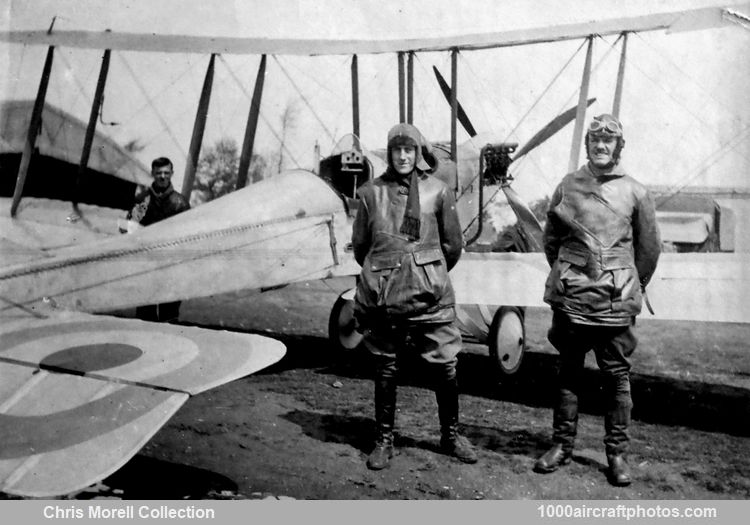
Chris Morrell: "My father, Charles Morrell Morrell (on the right above) was an Observer in the Royal Flying Corps (RFC) in 1915. The pilot was Ernest E. Hodgson (on the left above).
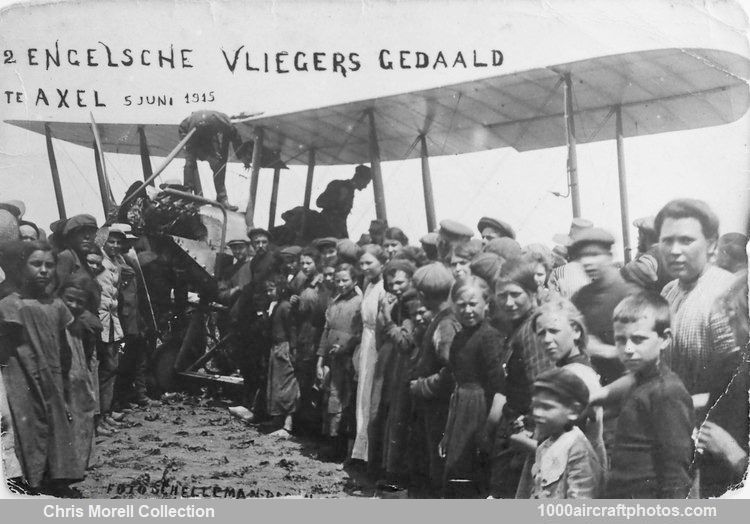
Text translation from old-fashioned Dutch: "2 English flyers descended at Axel June 5 1915." Photo by a Mr. Schelleman, who had a photo shop in Axel.
On June 5 of that year he and his pilot landed near Axel in neutral Netherlands having experienced engine trouble whilst on a reconnaissance mission with No. 8 Squadron. The aircraft was impounded by the Netherlands airservice. It eventually crashed and was destroyed.
My father and the pilot were interned initially at 'Timbertown' in Groningen, and then in Fort Wierickerschans, some 5 mls (8 km) north-east of Gouda. In 1916 they were released on parole. Charles Morrell Morrell died in Amsterdam at the Hotel Krasnapolsky on December 13, 1949 after a lifelong involvement with Dutch nation, including the Second World War and the intervening years.
01/31/2021. Remarks by
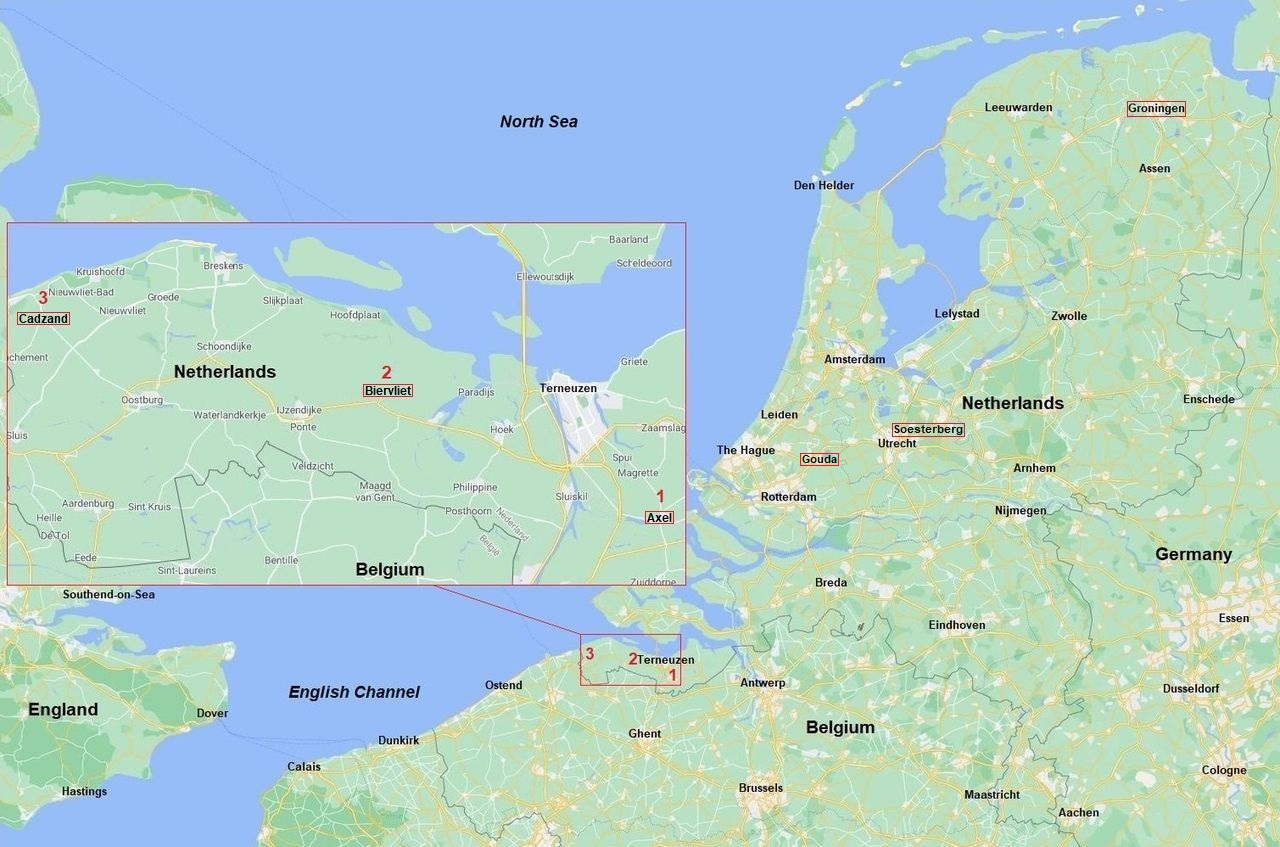
Johan Visschedijk: "The pictured aircraft was one of three B.E.2c's of the RFC which landed in the southwest of neutral Netherlands. The
landing spots were a few miles from the Belgian border and some 10 mls (16 km) apart in an area known as Zeeuws Vlaanderen (Zeelandic Flanders), in the province of Zeeland. Two of the three aircraft were confiscated and taken on charge by the Dutch LVA (Luchtvaartafdeling, Air Service).
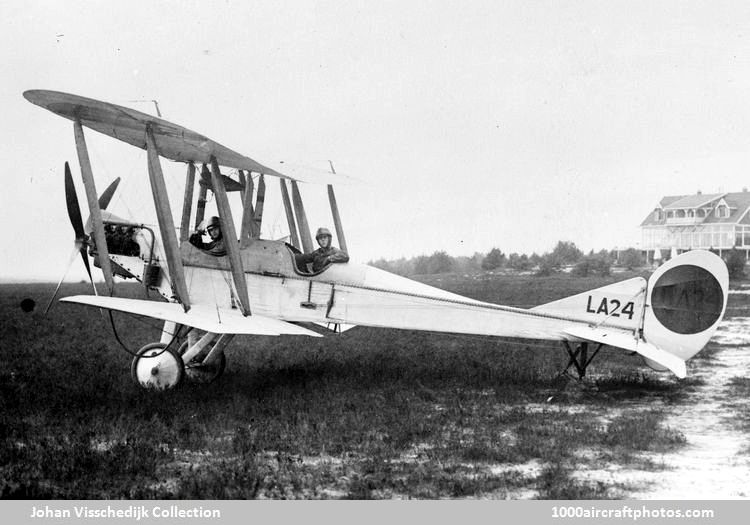
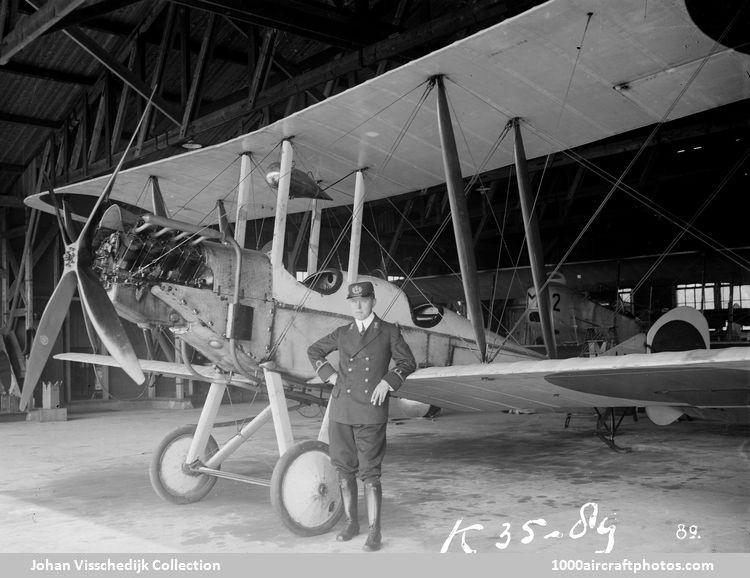
(LA24, ex-1677) with pilot G.A. Koppen in second cockpit, Soesterberg, the Netherlands, June 1915-May 1917
(
Johan Visschedijk Collection)
1. RFC serial 1677.
Flown by Hodgson and Morell Morell, landed June 5, 1915 near Axel and was interned as LA24.
(LA24, ex-1677) with Naval Aviation Service Officer 2nd class H. Steensma, Soesterberg, the Netherlands, October 30, 1915 (
Johan Visschedijk Collection)
The first Dutch Royal Navy officer to gain a flying license, officer-engineer 2nd class H. Steensma, gained it in this aircraft, as did the later Rear Admiral K.W.F.M Doorman (1889-1942).
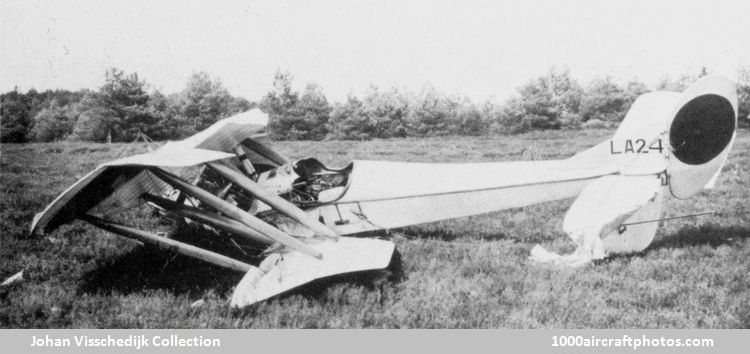
(LA24, ex-1677) near Hilversum, the Netherlands, May 24, 1917 (
Johan Visschedijk Collection)
On May 24, 1917, while flying near Hilversum, some 8 mls (13 km) north-west of Soesterberg, the aircraft plunged down from a height of 98 ft (30 m) and was destroyed. The Dutch crew, Lieutenants Land and Völcker, escaped injuries.
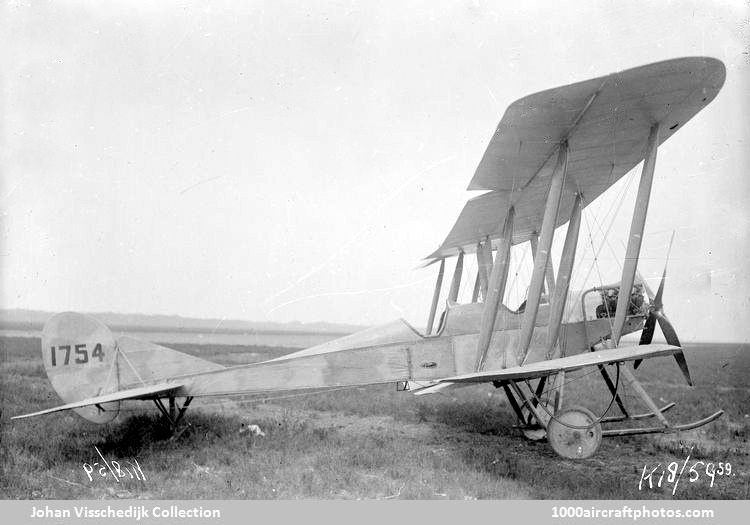
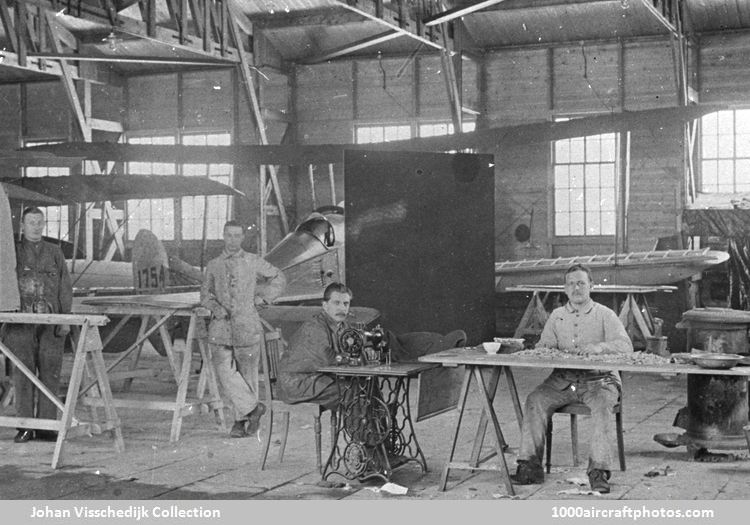
(1754) at Soesterberg, the Netherlands, March 1915 (
Johan Visschedijk Collection)
2. RFC serial 1754.
In service with No. 16 Squadron and crewed by Captain Francis Edward Fryer and Second Lieutenant Geoffrey H. Eastwood, this aircraft got lost in fog and low on fuel it was landed in the Paulinapolder in the township Biervliet on March 10, 1915.
(1754) in storage at Soesterberg, the Netherlands (
Johan Visschedijk Collection)
For unknown reasons the aircraft was stored for over two years. After the crash of the LA24 (ex 1677) on May 24, 1917, the Dutch serial LA24 was transferred to the stored 1754.
(
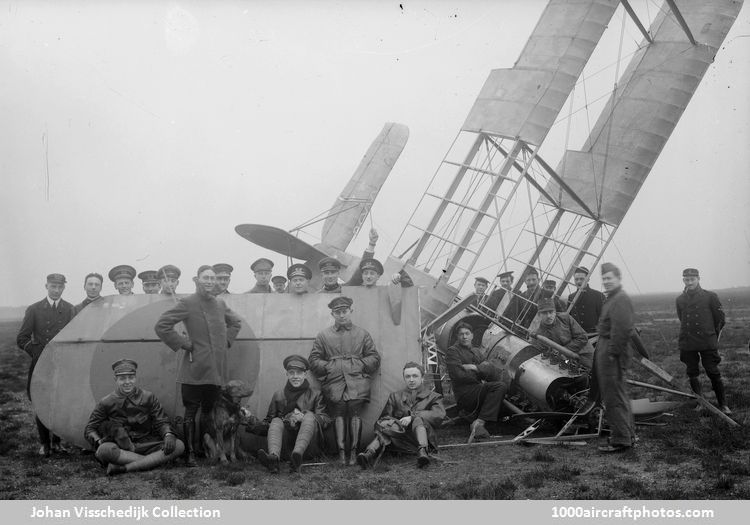
"BE-1", ex-1754) after mishap at Soesterberg, the Netherlands, 1918 (
Johan Visschedijk Collection)
Within a year the second LA24 crashed twice and was subsequently used for taxying training, coded
"BE-1".
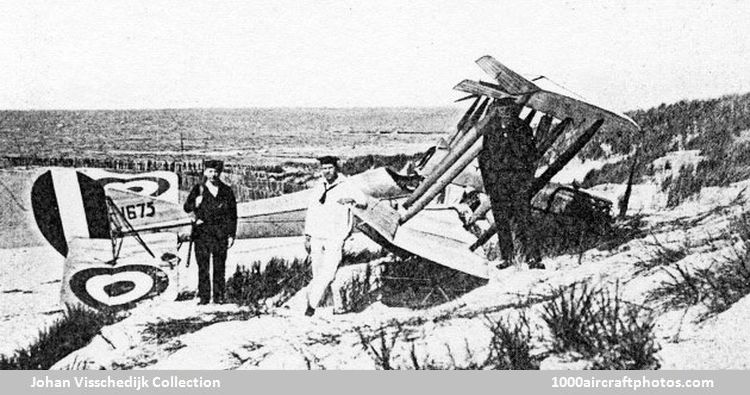
(1675) crashed near Cadzand on June 2, 1915 (
Johan Visschedijk Collection)
3. RFC serial 1675.
After it had been under enemy fire, this aircraft tried to land near Cadzand on June 2, 1915. The landing ended in the dunes and the aircraft was damaged beyond repair, only some parts were salvaged by the Dutch."
Read the type remarks on page
10615
Created January 31, 2021