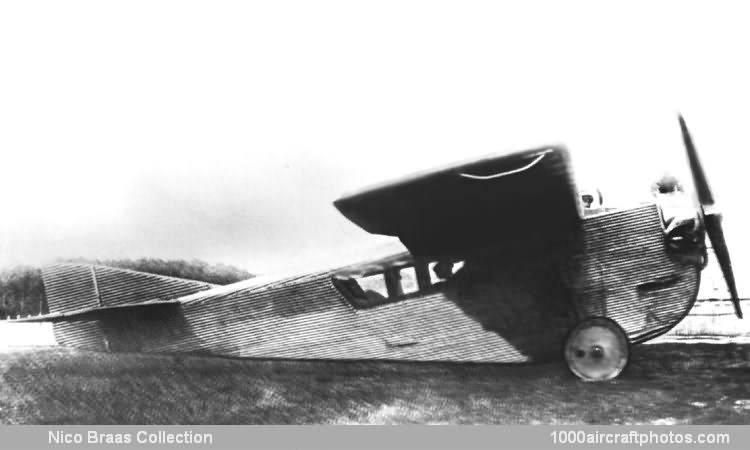
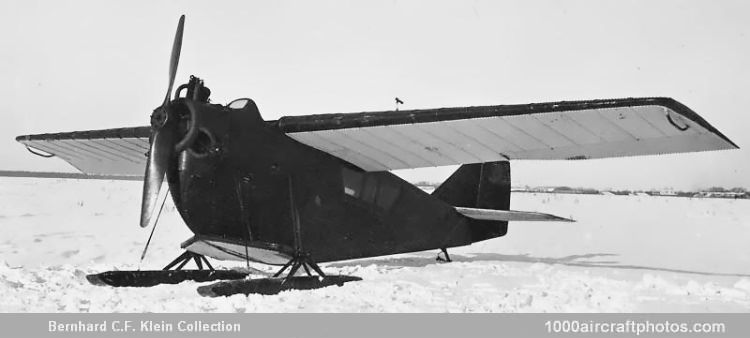
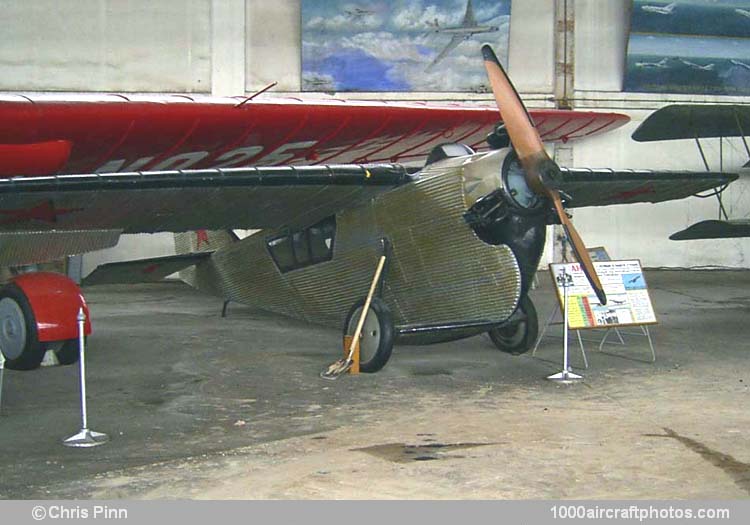
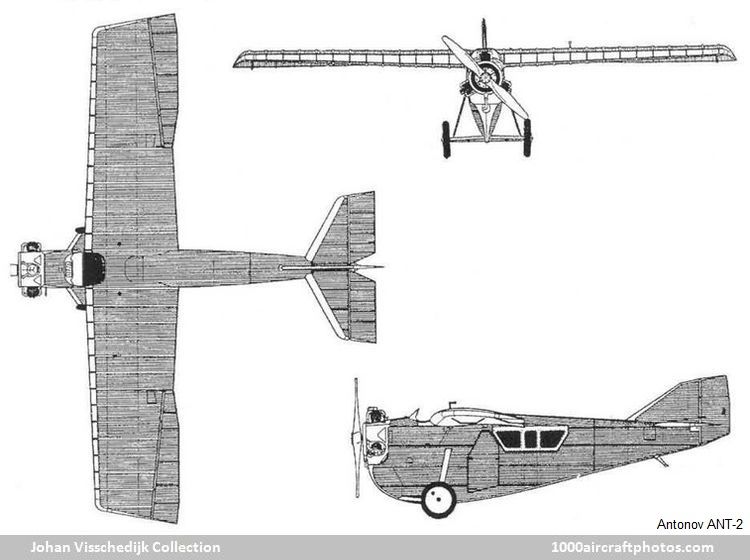
09/30/2011. Remarks by Johan Visschedijk: "Success of the ANT-1 prompted Tupolev to design this light transport, with an all-Kolchug aluminum airframe it became the first all-metal aircraft in Soviet Union. The design was reminiscent of the Junkers K 16 and skinned with same form of corrugated sheet (8 mm height, 40 mm pitch) in same gauges. It had a two-spar cantilever high wing with thirteen truss ribs each side mounted on deep pot-bellied fuselage with almost flat sides coming together on lower center line to give near-triangular section.
An open pilot cockpit was located at the leading edge, while the enclosed cabin was entered through a door on left and seated two passengers in seats facing each other. The main gears could be fitted with wheels, or with skis with rubber springing inside fuselage and Kolchug skids under the wing tips. Power plant was an 100 hp Bristol Lucifer three-cylinder air-cooled radial engine.