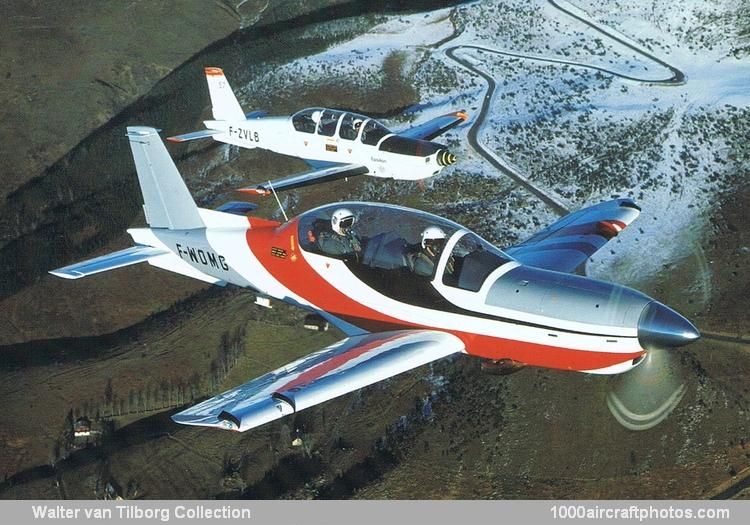
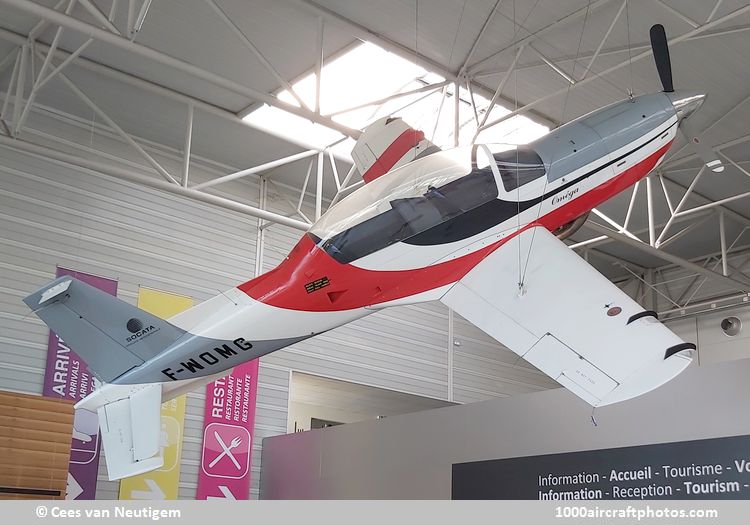
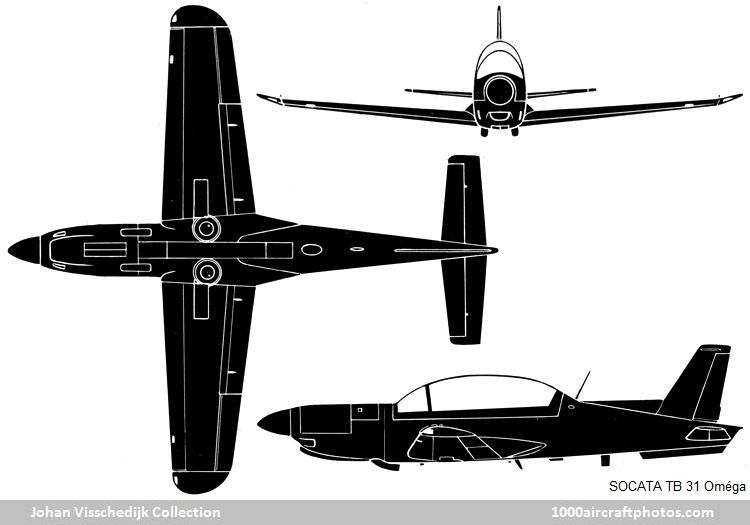
02/08/2026. Remarks by Johan Visschedijk: "In the private venture to produce a new turboprop trainer, replacing the piston engined TB 30 Epsilon, SOCATA converted the sole TB 30TP turboprop test bed to the prototype of the new turboprop trainer, designated TB 31 Oméga.
The Oméga represented a substantial increase in performance to the Epsilon yet still retained 60% commonality with the earlier trainer. There were several significant and easily identifiable differences though. Most important of the changes was the substitution of the Epsilon's 330 hp Textron Lycoming AEIO-540 flat six-cylinder engine with a 360 shp (de-rated from 488 shp) Turboméca TP319-A1S Arius1D turboprop engine, featuring Full Authority Digital Electronic Control (FADEC). Power was delivered through a three-bladed Hartzell prop, the original Turbo Epsilon featured a composite three bladed Ratier Fagiec unit.
Other changes include a new two-piece molded cockpit canopy, which significantly increases all round vision. The cockpit was fitted with Martin Baker 15FC lightweight ejection seats. Changes to the airframe include a revised cowling shape and a dorsal fin. The aircraft avionics featured cathode ray tube displays for radio and navigation data.
The TB 31 Oméga flew for the first time on April 30 1989, successful flight testing followed, but SOCATA was unsuccessful to sell the aircraft to the French AF, which selected the much larger, more powerful Embraer Tucano.